For new homeowners, especially those fresh off a first-time home purchase, the post-move transition can feel surprisingly heavy. Moving in stress doesn’t end when the truck leaves; it lingers as unpacking fatigue, half-finished rooms, and the quiet worry that the house still feels unfamiliar. Adjusting to a new neighborhood adds another layer, from learning daily rhythms to figuring out where a sense of belonging fits. The good news is that home settling challenges usually come down to a few solvable friction points, and momentum can start quickly.
Set Up “Day-One” Spaces That Actually Work
You don’t need every box unpacked to feel settled, you need a few reliable “home bases” that reduce daily friction. Start with the spaces you touch the most, so routines return even while the rest of the house is still in progress.
- Create an Entry Drop Zone (keys, shoes, mail): Pick one wall or corner by the most-used door and commit to it as the landing spot. Add 3 containers, one for keys/wallets, one for shoes, one for incoming paper, so clutter doesn’t spread the moment you walk in. Tape a small note inside the paper bin with a simple rule: “Sort on Tuesdays/Fridays for 10 minutes.” This one station immediately cuts the “where is it?” stress that often hits after move-in day.
- Make the Kitchen Functional Before It’s Perfect: Unpack only what supports a week of normal meals: one pan, one pot, one knife, one cutting board, a set of plates/bowls, and your go-to coffee/tea setup. Put those items in the most convenient cabinets, even if you’ll change them later, then label the rest of the boxes “Kitchen, Later” to avoid decision fatigue. If you’re furnishing a new home, prioritize a trash can, basic lighting, and a small surface for prep; these basics make the room usable fast without forcing a full design plan.
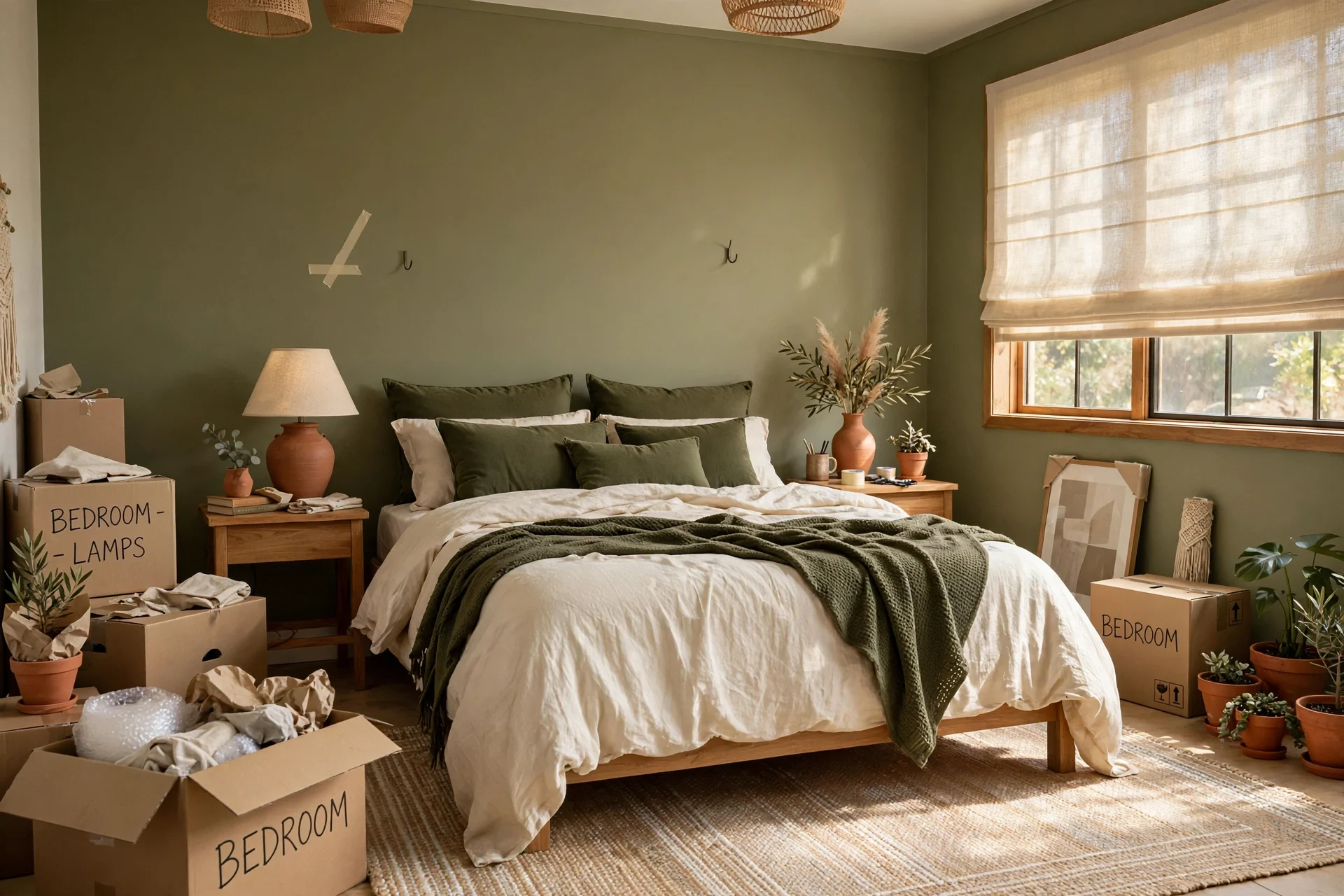
- Set Up a “Sleep-First” Bedroom: Aim for one calm, finished-feeling corner: bed assembled, sheets made, phone charger placed, and a bedside surface (even a sturdy box works for a week). Keep a small basket for nightly essentials, meds, lip balm, book, glasses, so you’re not rummaging through boxes at midnight. Hang one set of curtains or temporary blinds early; better sleep makes everything else (unpacking, errands, meeting neighbors) feel more manageable.
- Build a Minimal Work/Command Station (even if you don’t WFH): Choose a table, desk, or countertop where you can handle paperwork, email, and home setup tasks without spreading piles across the house. Give it a charger, a pen cup, a folder labeled “House,” and one comfortable chair, because working hunched over a random stool adds up fast, and moderate to severe discomfort is common when people work remotely without proper support. This spot also helps with budget follow-through: bills, receipts, and contractor notes stay in one place.
- Use a Two-Bin Declutter Method to Keep Momentum: Set up two clearly marked bins in a central area: “Donate/Sell” and “Not This Month.” When you open a box, decide quickly, keep and place, donate, or defer, so the house doesn’t fill with “maybe” piles. Revisit the defer bin in 30 days; if you didn’t need it, you’ve got an easy decision and a cleaner home.
- Personalize One Wall, Not the Whole House: Pick a single high-visibility spot, above the sofa, the entry, or the kitchen nook, and style it with 3–5 meaningful items (a framed print, a mirror, family photos, a small shelf). This is the fastest way to make the space feel like yours without overspending while you’re still learning how you use each room. Keeping personalization contained also protects your budget, leaving breathing room for the practical upgrades that support long-term stability.
Build Long-Term Stability: Turn New-Home Goals Into Career Skills
Once your day-one spaces are functional, it’s easier to look beyond unpacking and focus on what will keep the house feeling secure long-term. If your new mortgage, utilities, or repairs are stretching the budget, earning a degree can be a practical way to strengthen long-term earning potential and build more financial stability as you settle in. A business degree can also help you develop skills in accounting, business, communications, or management, tools that can translate across many roles and industries. And because time is tight when you’re learning a new home, flexible online business degree coursework can make it easier to keep working while still making steady progress in your studies.
Habits That Make a New House Feel Like Home
When you repeat simple habits, your home starts to run on autopilot and feels calmer faster. Give each routine time to stick since research on habit formation shows it often takes weeks, not days.
10-Minute Reset
- What it is: Put away strays, clear counters, and do a quick trash sweep.
- How often: Daily
- Why it helps: Waking up to clear surfaces makes the house feel settled.
Weekly Home “Pilot List”
- What it is: Keep one shared list for errands, calls, and small fixes.
- How often: Weekly
- Why it helps: It reduces forgotten tasks and spreads the mental load of tasks.
Two-Room Clean Rotation
- What it is: Deep-clean only two rooms, then stop when time is up.
- How often: Weekly
- Why it helps: You stay consistent without losing a whole weekend.
Seasonal Safety Sweep
- What it is: Check filters, test alarms, and scan for leaks or drafts.
- How often: Per season
- Why it helps: Small checks prevent stressful surprises.
Neighborhood Hello Loop
- What it is: Take the same short walk and greet one neighbor.
- How often: Weekly
- Why it helps: Familiar faces make the area feel like yours.
New Home Q&A: Settle In Without the Stress
Q: What utilities should I set up first after moving in?
A: Start with electricity, water, and trash service, then confirm internet availability and installation dates. Call to transfer accounts, ask about deposit requirements, and set autopay once the first bill looks correct. Take photos of the meter readings on day one for peace of mind.
Q: How do I do a basic safety check in the first 24 hours?
A: Locate the main water shutoff, electrical panel, and gas shutoff, then label them. Test smoke and carbon monoxide alarms and replace batteries immediately. Many checklists note that smoke detectors should be installed in key areas, so verify coverage before you unpack too much.
Q: When should I change locks or rekey the house?
A: As soon as you can, ideally within the first week. Rekeying is usually faster and cheaper than replacing all hardware, and it reduces worry about unknown spare keys.
Q: How can I catch leaks or small problems early?
A: Do a slow walkthrough with a flashlight: check under sinks, around toilets, behind the washer, and near the water heater. Set one reminder to recheck those spots after a heavy rain or first big load of laundry.
Q: What should I do if a room feels unsafe for an older relative or guest?
A: Prioritize bathrooms first since they are critical areas for slips and falls. Add a non-slip mat, brighter lighting, and a grab bar if needed, and keep the floor clear of rugs that slide.

Create Confidence and Comfort in Your New Home This Week
Moving is exciting, but it can also leave a house feeling unfamiliar, with loose ends that quietly drain energy. The calm approach is to focus on a few high-impact basics, keep expectations realistic, and build routines that support settling in success over time. When those small choices stack up, embracing new home life starts to feel natural, boosting homeowner motivation, confidence in homeownership, and long-term home comfort. Home happens through small, repeated choices, not one perfect weekend.
This article has been written by Patrick Young on behalf of Clare Holland Interior Creations Ltd.